

Norval Foundation: African Art on a Global Stage
After our time in Durban, we took a flight back to Cape Town for a few more days to enjoy the city before our flight back home. This time we were staying south of the city in Hout Bay. Since we were so close, we had to see the Norval Foundation, and it was yet another amazing and unexpected experience.
My goal for this trip has been to better understand both the indigenous artistic traditions of southern Africa and the ways contemporary African artists continue to reinterpret those traditions. After weeks of museums, cultural sites, workshops, and conversations, Norval became a place where a new perspective began to crystallize for me. More on that later.
Before even entering the galleries, the structure itself makes a striking impression as you approach it.
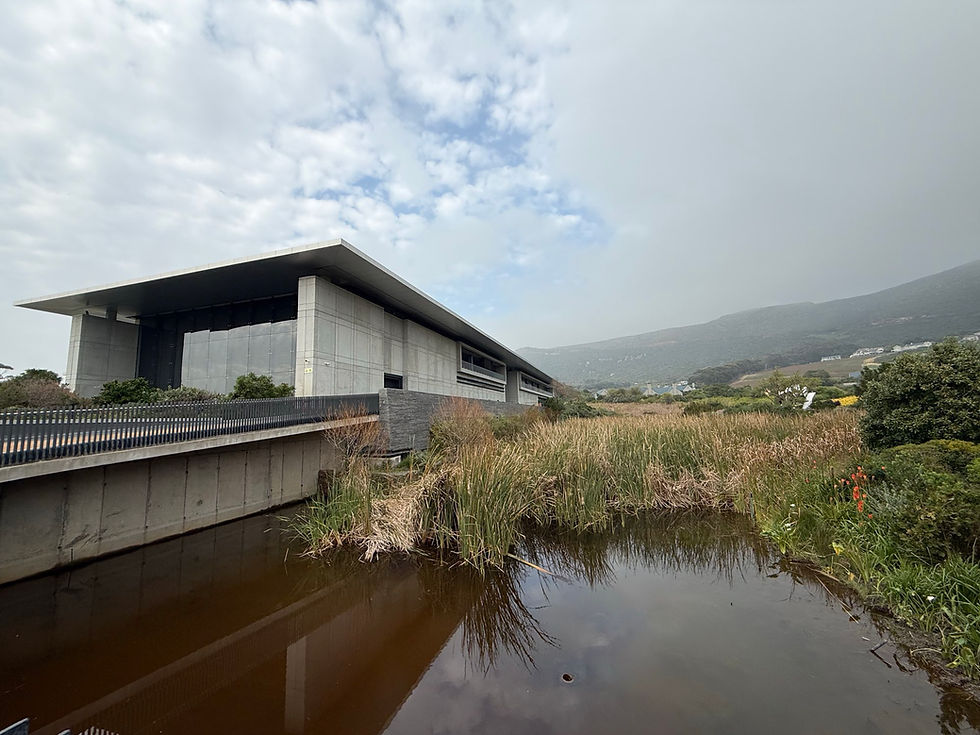
The building itself is a work of contemporary design. Set against the dramatic backdrop of the Constantiaberg Mountains, the museum’s modernist architecture relies on glass, exposed concrete, steel, and natural light to create a contemplative space. The large open atrium with expansive glass walls allows the surrounding landscape and gardens to become part of the experience, blurring the boundary between gallery and nature.
And since this museum has a limited permanent collection, the sculpture garden is true highlight. Rather than simply placing sculptures on a lawn, the landscape becomes part of the experience. Much like our earlier safaris, walking paths reveal and conceal works as you move through the gardens, allowing each sculpture to emerge naturally from the environment. The sculpture garden alone could occupy an entire afternoon. Instead of the “Big Five” from a safari, I present to you the “Big Four”- works that particularly stood out to me in the garden.
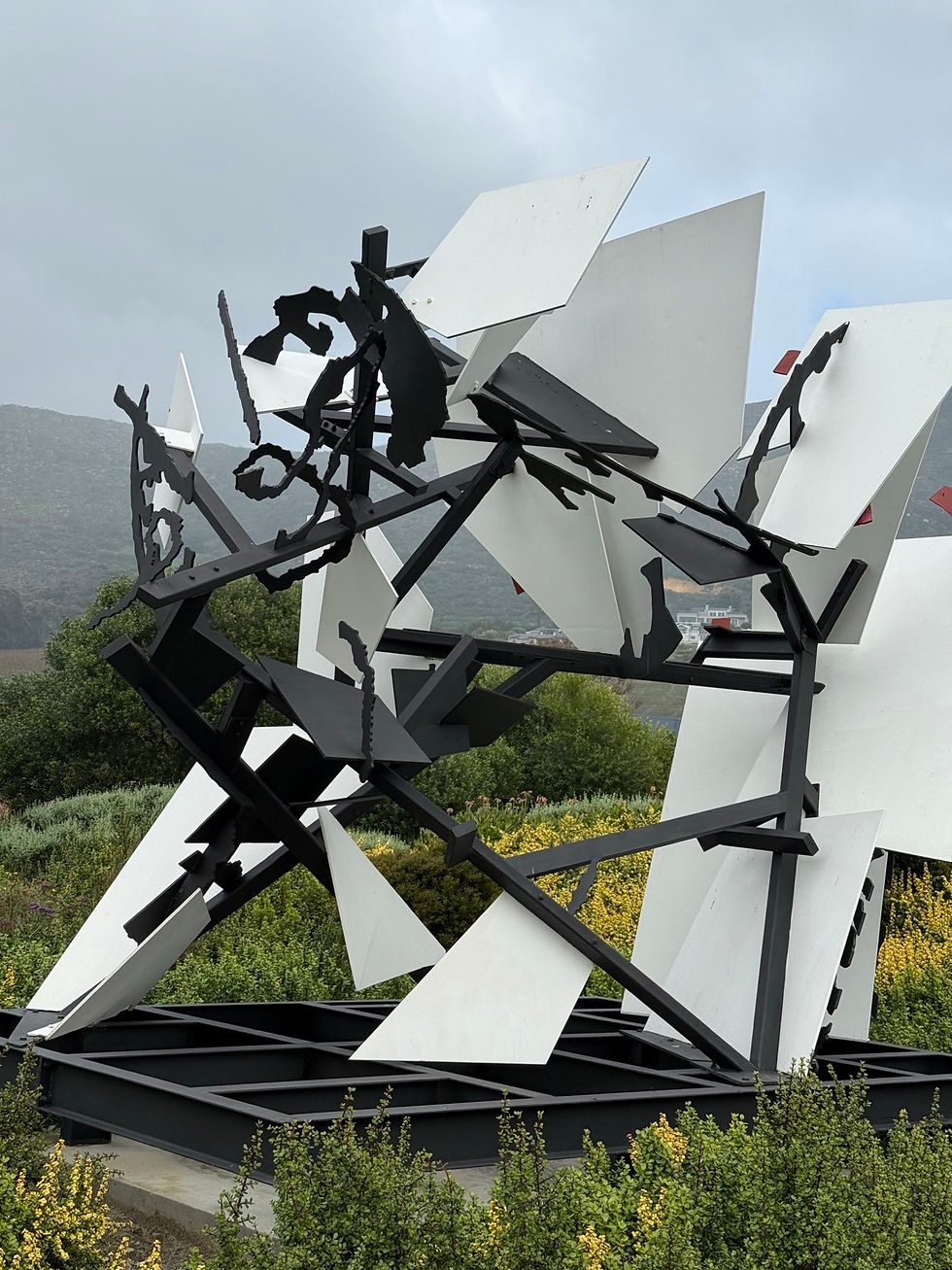
One of the first works that immediately captured my attention was William Kentridge’s World on its Hind Legs (2010). Constructed from steel plates that only fully resolve into a recognizable image from specific viewpoints, the sculpture speaks about perception itself. Depending on where you stand, the world appears stable—or fragmented. It is a powerful reminder that perspective shapes understanding. Looking back, that feels like an appropriate metaphor for this entire trip. I arrived in South Africa with many questions and assumption. Moving through this country and engaging with its art and people—many of those questions have become more nuanced. The artwork hasn't changed, but my perspective has. Here’s a video that captures what I’m talking about.
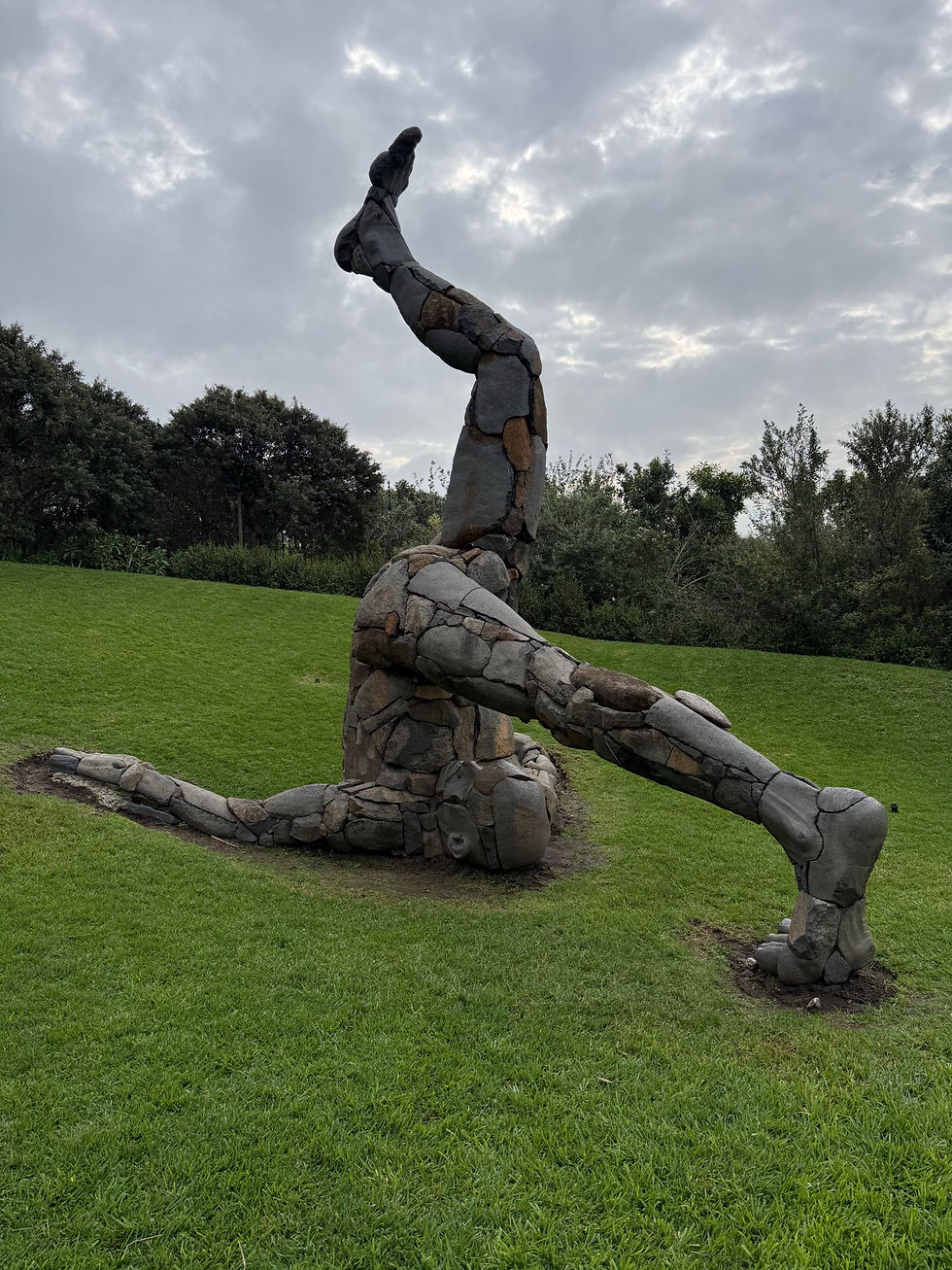
I was equally excited to encounter Angus Taylor again after seeing his work earlier at NIROX Sculpture Park. His monumental Holderstebolder (2018) presents an enormous inverted human figure whose dramatic orientation was hard to miss. Rather than celebrating heroic monumentality, Taylor’s sculpture feels deeply human and quite playful.

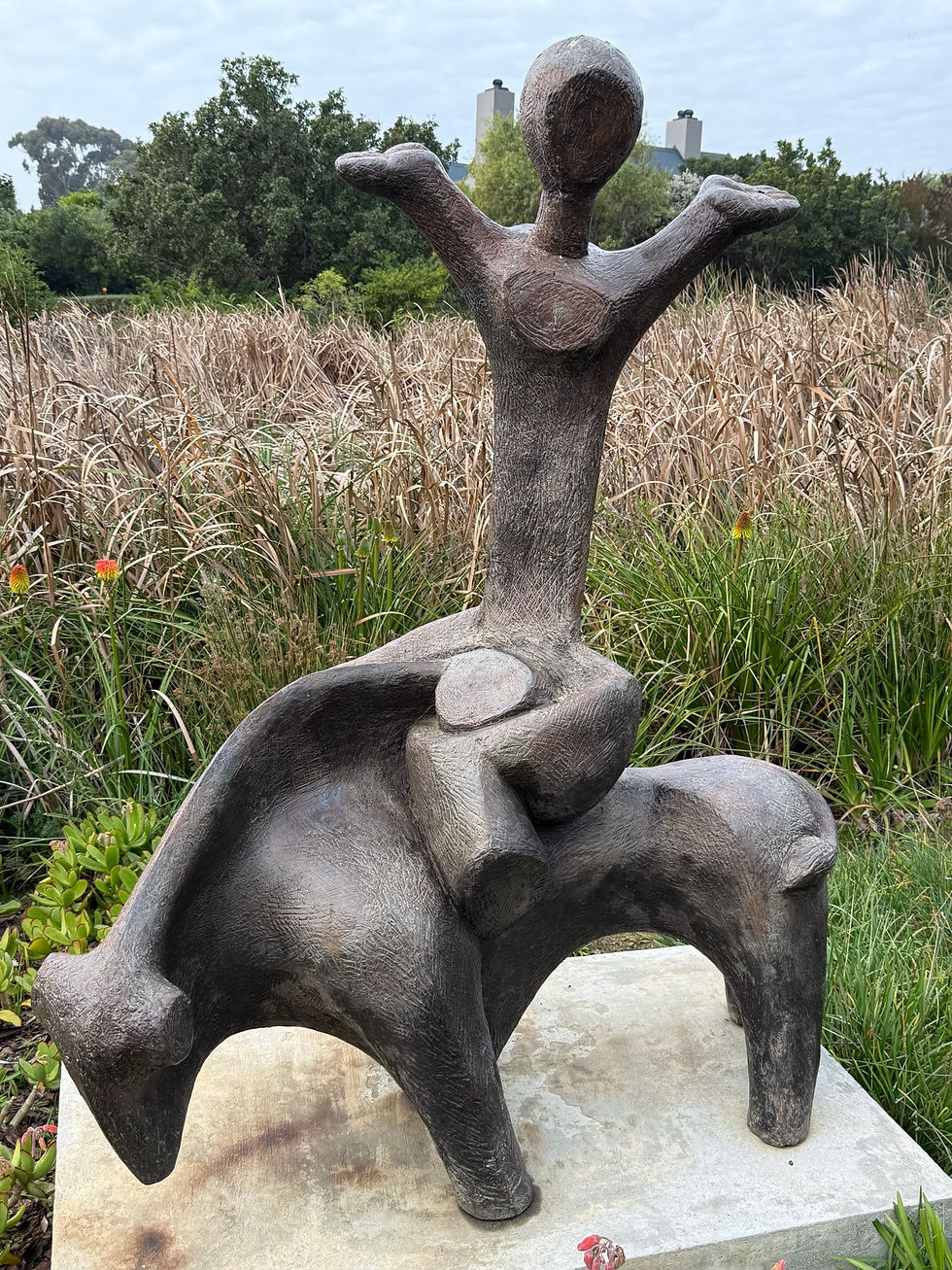
Another favorite was Speelman Mahlangu’s Riding the Bull I, a work that beautifully bridges African traditions with modernism. Drawing upon Ndebele patterning, Chokwe masks, Cubism, and German Expressionism, Mahlangu creates imagery that feels simultaneously ancient and contemporary. This work was yet another reminder that African artists have never worked in isolation, but have continually absorbed and transformed influences from many cultures while maintaining their own distinct voice.


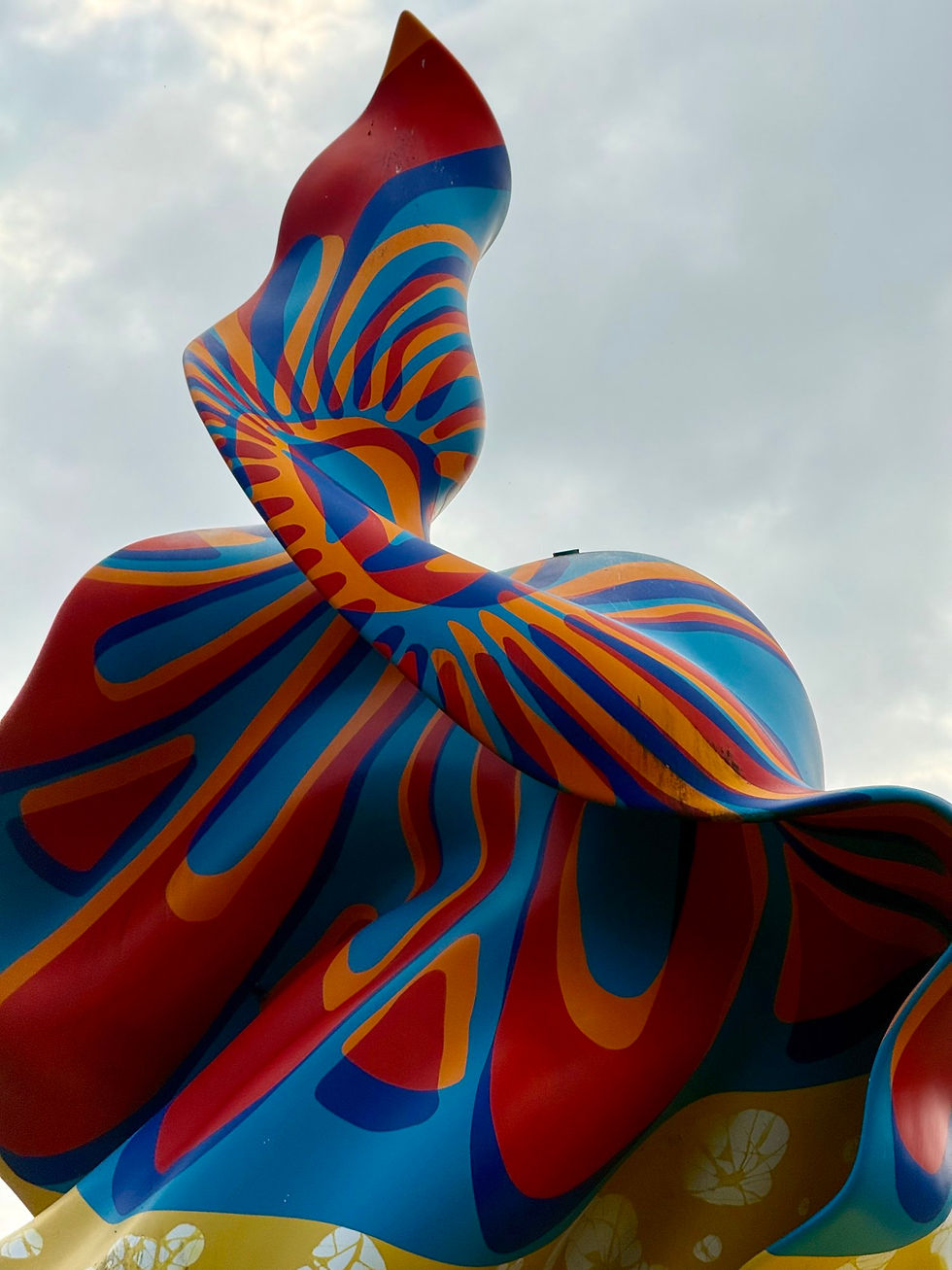
Nearby was Yinka Shonibare’s Wind Sculpture (SG) III, whose swirling form is painted in the style of brilliantly patterned Dutch wax-print textiles. Although these fabrics have become widely associated with African identity, their history is itself global—originating from Indonesian batik, manufactured by Europeans, and embraced throughout West Africa. Shonibare uses this layered history to question simple ideas about identity, authenticity, and cultural exchange. The sculpture seems almost weightless as though a gust of wind had frozen fabric in midair.

And then there were the plants which nearly stole the show. Indigenous plants in the reflecting pool, flowering landscapes, mountain views, and intentionally positioned sculptures created one of the most beautiful museum settings I’ve ever experienced. I think the photos speak for themselves.

Inside the museum, five temporary exhibitions demonstrated the remarkable breadth of contemporary African art.

One surprise was encountering Edoardo Villa again after learning about him earlier at NIROX. The Last Villas presents the final sculptures from the pioneering modernist’s career. Unlike the monumental welded steel works for which he became famous, these late sculptures are playful, colorful, almost whimsical and reveal an artist still experimenting well into his nineties.
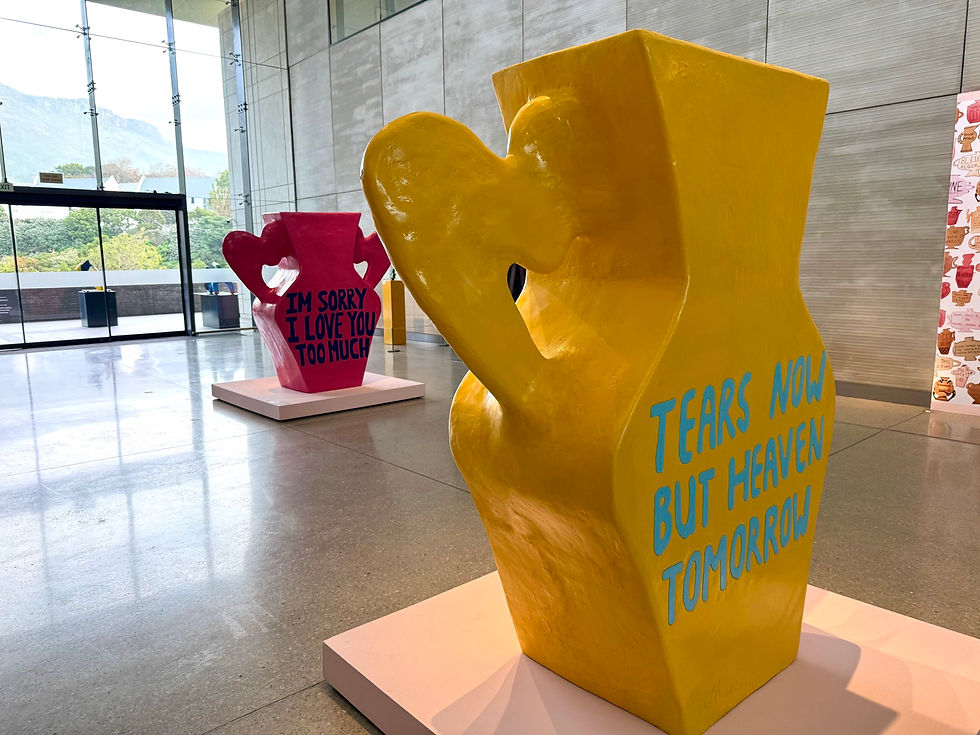
Nearby, in the atrium the monumental ceramic vessels of Githan Coopoo could not have been more different. His exhibition, Tears Now but Heaven Tomorrow, transforms clay into oversized handbags, vases, and sculptural objects covered with witty, vulnerable, and deeply personal text. Having begun his artistic career designing jewelry, Coopoo explores adornment, gender, queerness, identity, and belonging with warmth and humor. His work reminds viewers that vulnerability is not weakness but strength.

The next exhibit was Portia Zvavahera’s Tanda rima. Born in Zimbabwe, Zvavahera creates deeply spiritual paintings rooted in dreams, family, prayer, and Shona cultural traditions. Her richly layered surfaces combine painting, monoprinting, wax resist, and intricate patterning to produce vibrant works that feel both intimate and monumental. The recurring themes of protection, motherhood, angels, and communal care may not have been obvious to me, but I found the richness and immersive beauty of these works to be quite moving. I really wish I had had more time with them but there was still more to see.


The exhibition that surprised me most was Irma Stern: A Life of Displacement. Although Stern belongs to an earlier generation, her work provides important historical context for understanding South African art. Born to German-Jewish parents, educated in Berlin during the height of German Expressionism, and later returning to South Africa, Stern’s career was shaped by repeated displacement and political upheaval. Her bold color and expressive brushwork reflect her Expressionist training while remaining rooted in Africa. The exhibition also explored the temporary closure of the Irma Stern Museum, creating an interesting parallel between Stern’s own life experiences of displacement and the uncertain future of preserving her work.

I am intentionally saving my favorite exhibition, Brett Murray’s Wild Life for a future post. It was so good, comprehensive, and thought provoking that it truly deserves its own space to do it justice.

As I left the Norval Foundation, I realized that one of my original assumptions has changed. I arrived expecting to find contemporary artists borrowing heavily from traditional African techniques. Instead, the artists I encountered were not trying to fit into anyone else’s definition of “African art.” They were simply making ambitious, thoughtful, and challenging contemporary art from their own perspectives.

Their work speaks to identity, migration, politics, memory, ecology, spirituality, and history—the same questions artists are asking around the world—but through experiences that are uniquely their own. Rather than standing apart from the international art world, these artists are helping shape it. They are an essential voice in the global conversation.

The work at the Norval Foundation is yet another example that demonstrates that Africa is not on the margins of contemporary art—it is one of the places where some of its most compelling ideas are being created today.


Comments