
Wild Life: Brett Murray and the Power of Satire
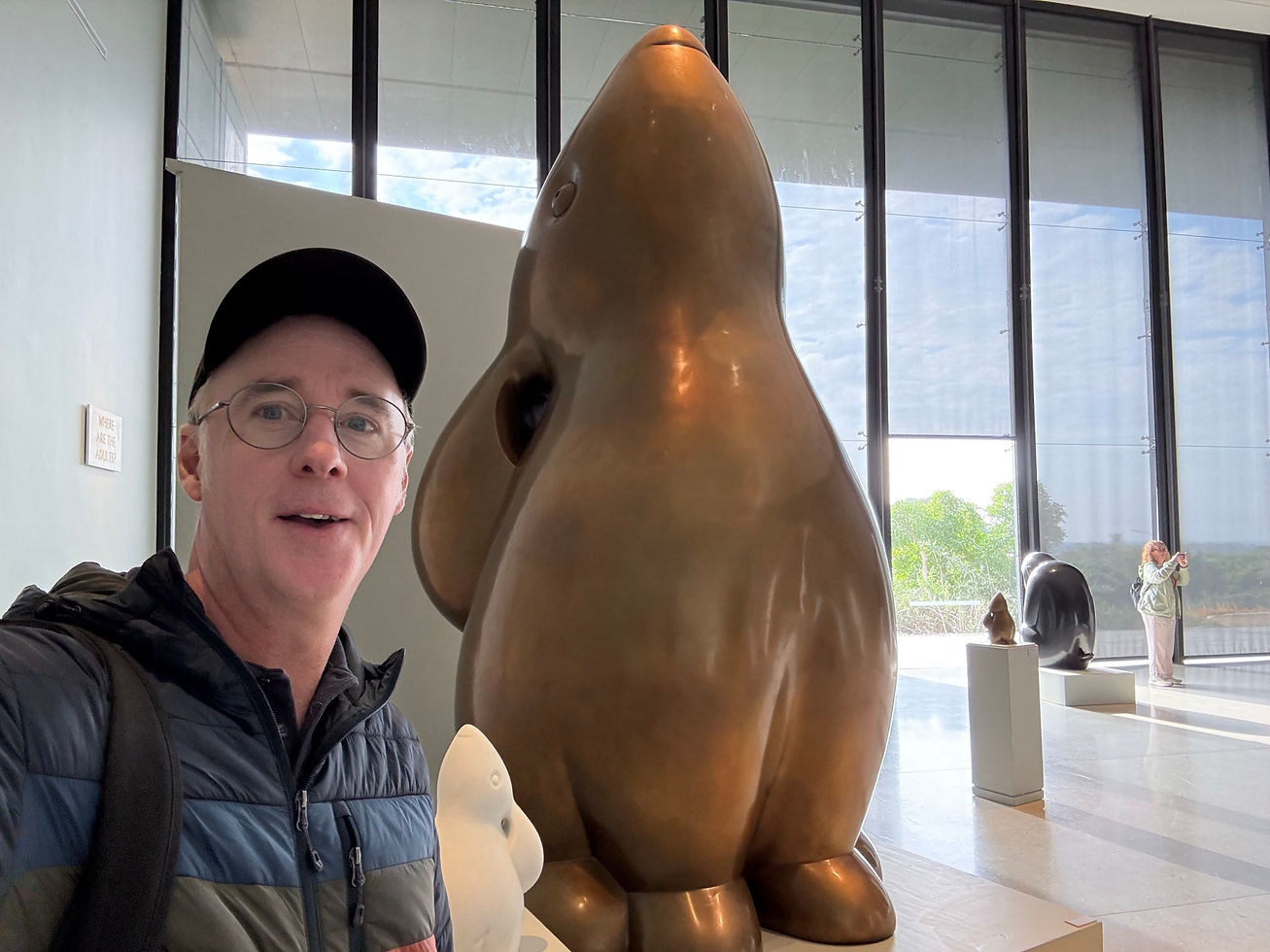
My favorite exhibit from our visit to the Norval Foundation was Wild Life, the retrospective focusing on the sculptures of South African artist Brett Murray.


I’m drawn to art that tackles difficult political and social issues—not through outrage alone, but through wit, metaphor, and beautifully crafted objects. When an artwork first invites you in and only later reveals its sharper meaning, I’m on board!
Murray’s sculptures do exactly that.
At first glance they seem playful, even charming. Their simplified forms clearly reflect the influence of one of his teacher, the great South African modernist sculptor Bruce Arnott, whose work I had encountered earlier in the trip out front of the Iziko Museum. Murray inherits Arnott’s love of bold, simplified forms, but pushes them in a very different direction. His sculptures become visual jokes, political cartoons rendered in bronze and marble.
Many are irresistibly appealing. Aesthetically, they remind me of something Walt Disney and Constantin Brâncuși might have designed together.
Then you read the title and suddenly everything changes.
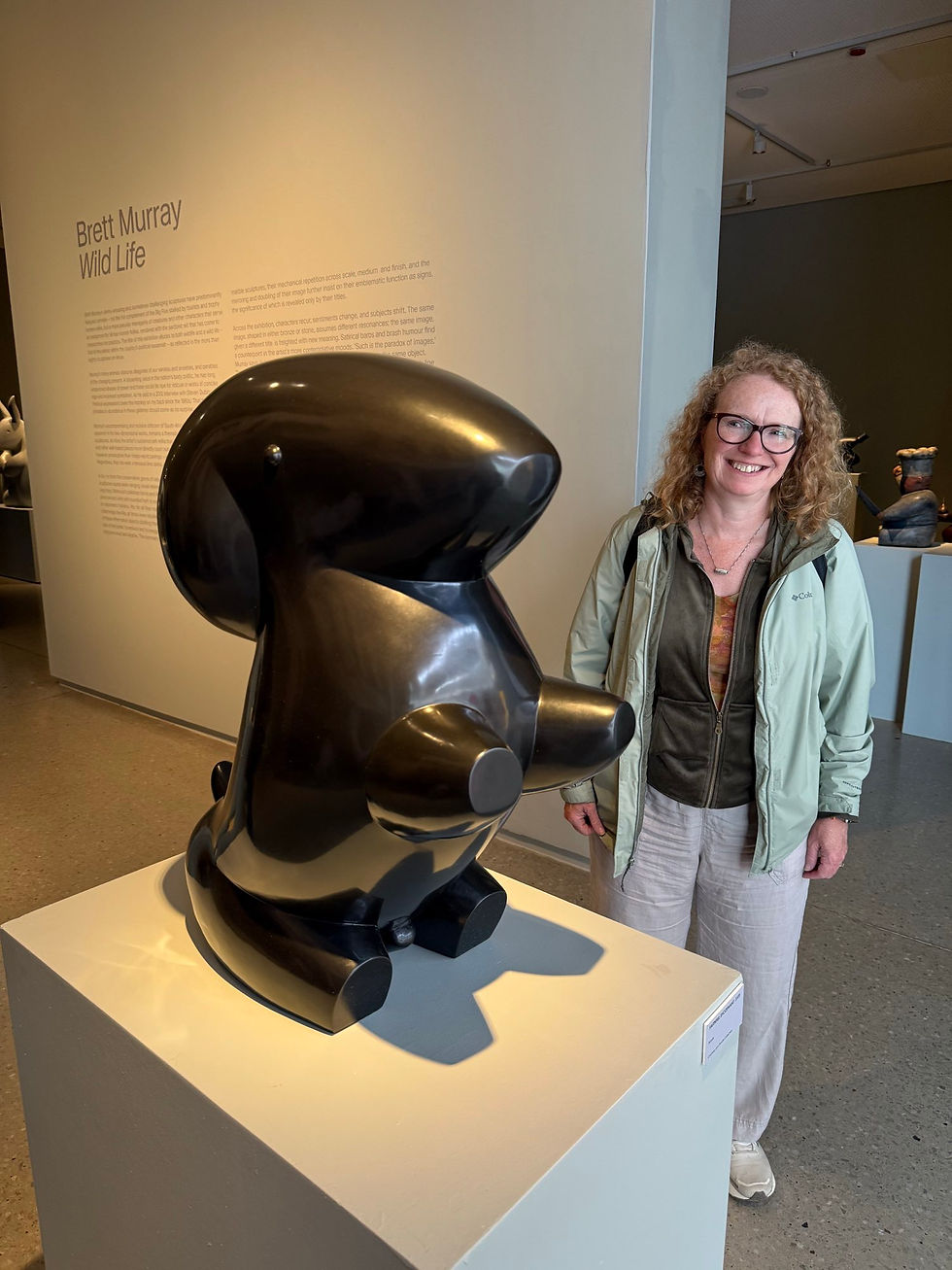
One of the first sculptures we encountered was Faithful Sycophant (2018). It appears to be nothing more than a friendly little simplified dog sculpture. But paired with its title, the sculpture transforms into a biting commentary on political loyalty and blind obedience.

Nearby sat Bureaucrat, a turtle lying helplessly on its back with a Bic pen in its mouth. It was funny, absurd, and immediately understandable. Murray has a remarkable ability to compress complicated political ideas into simple visual metaphors.
The exhibition followed his career over four decades, revealing an artist whose concerns evolved alongside South Africa itself.


His early painted resin sculptures, including Drunken Soldier (1985), already displayed the sharp humor that would become his trademark. Later works grew increasingly ambitious, moving into bronze, marble, and monumental public sculpture while never losing their satirical edge.

One work that literally stopped me in my tracks—and made me laugh out loud—was Bart on Safari. Murray places the cartoon head of Bart Simpson repeatedly over the body of a traditional West African Baule figure. It’s like a surreal case of the chicken pox. It sounds absurd—and it is—but it also becomes a surprisingly thoughtful meditation on globalization, tourism, and the collision of cultures in post-apartheid South Africa.
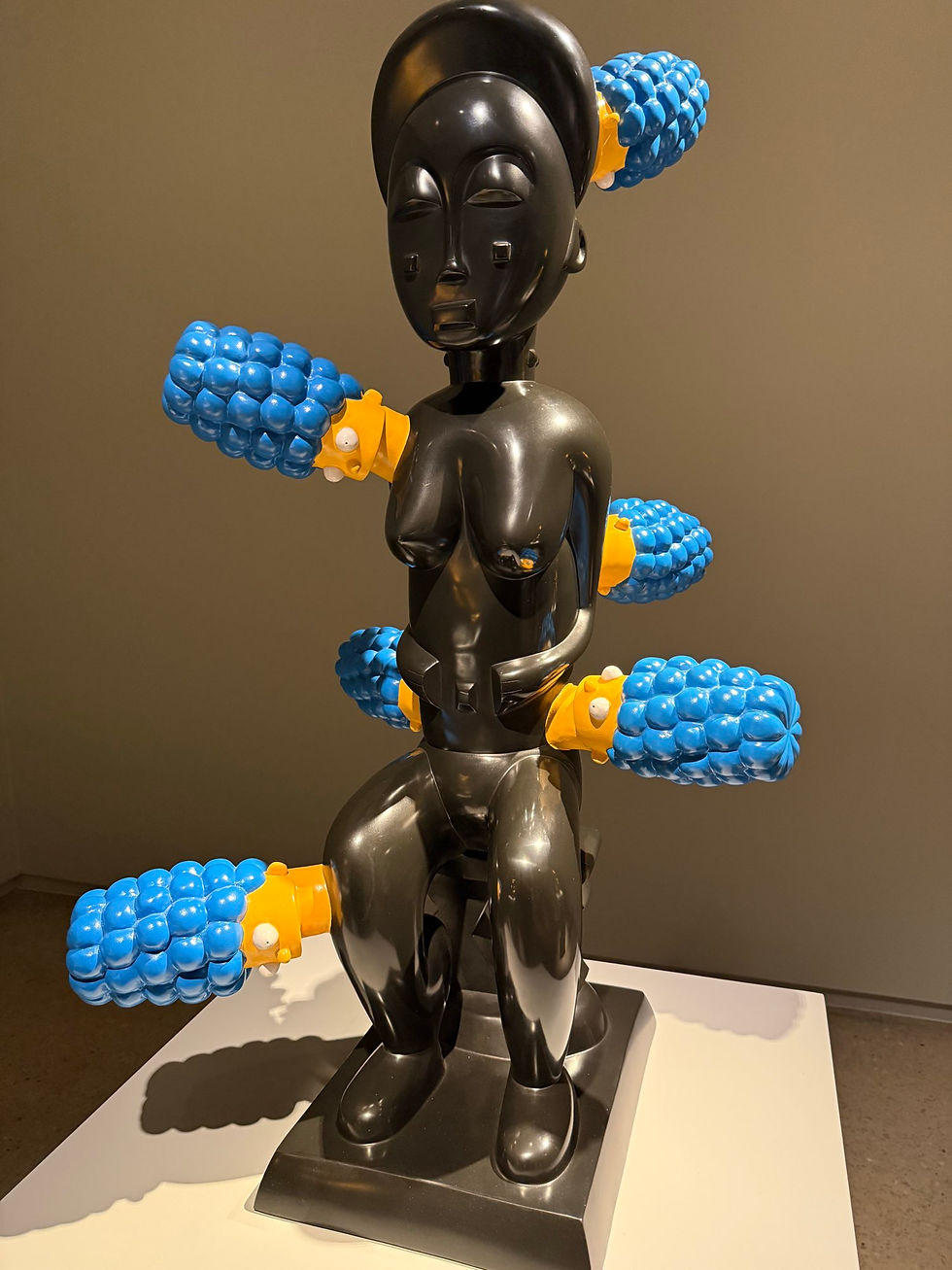
When Murray first proposed a monumental version of this work for a public commission in Cape Town, it generated controversy. Critics accused him of disrespecting African cultural heritage by appropriating a sacred figure. Murray responded that the sculpture was based not on an original ceremonial object but on a mass-produced tourist curio, pointing to the booming trade in “African art” made for visitors rather than traditional use. That distinction shifted the conversation from cultural disrespect to questions of authenticity, commercialization, and the ways cultures are continually reshaped through tourism and global exchange. Like much of Murray’s work, the sculpture is funny at first glance but becomes increasingly complex the longer you spend with it. He’s willing to provoke uncomfortable questions, even if it means upsetting the apple cart.

Another piece was Lying Pig, a sculpture that continues Murray’s criticism of corruption and political power. His animals rarely represent animals. They are stand-ins for us—for our ambitions, failures, egos, and institutions.

Perhaps the most subtle piece was Witness, a quiet sculpture that reflects a noticeable shift in Murray’s later career. Following years of political controversy—including the international uproar surrounding his painting The Spear and the death threats that followed—his sculpture began turning away from direct attacks on politicians and toward something more reflective. Many of these later animals seem less interested in accusation than in vulnerability, fear, and the uncertainty of contemporary life.
That evolution was evident throughout the exhibition.

One gallery revisited Murray’s long-running dialogue with censorship and political power. His sculpture Party vs The People was not subtle at all and distilled decades of democratic frustration into a single memorable image. While slightly shocking shocking, it is a good example of how artists often become society’s conscience.

What impressed me most was Murray’s restraint.
These sculptures are not loud and all but the latest work is modest in size.
Instead, they ask viewers to slow down, look carefully, and discover that the title is often as important as the object itself. Meaning emerges through the conversation between image and language.
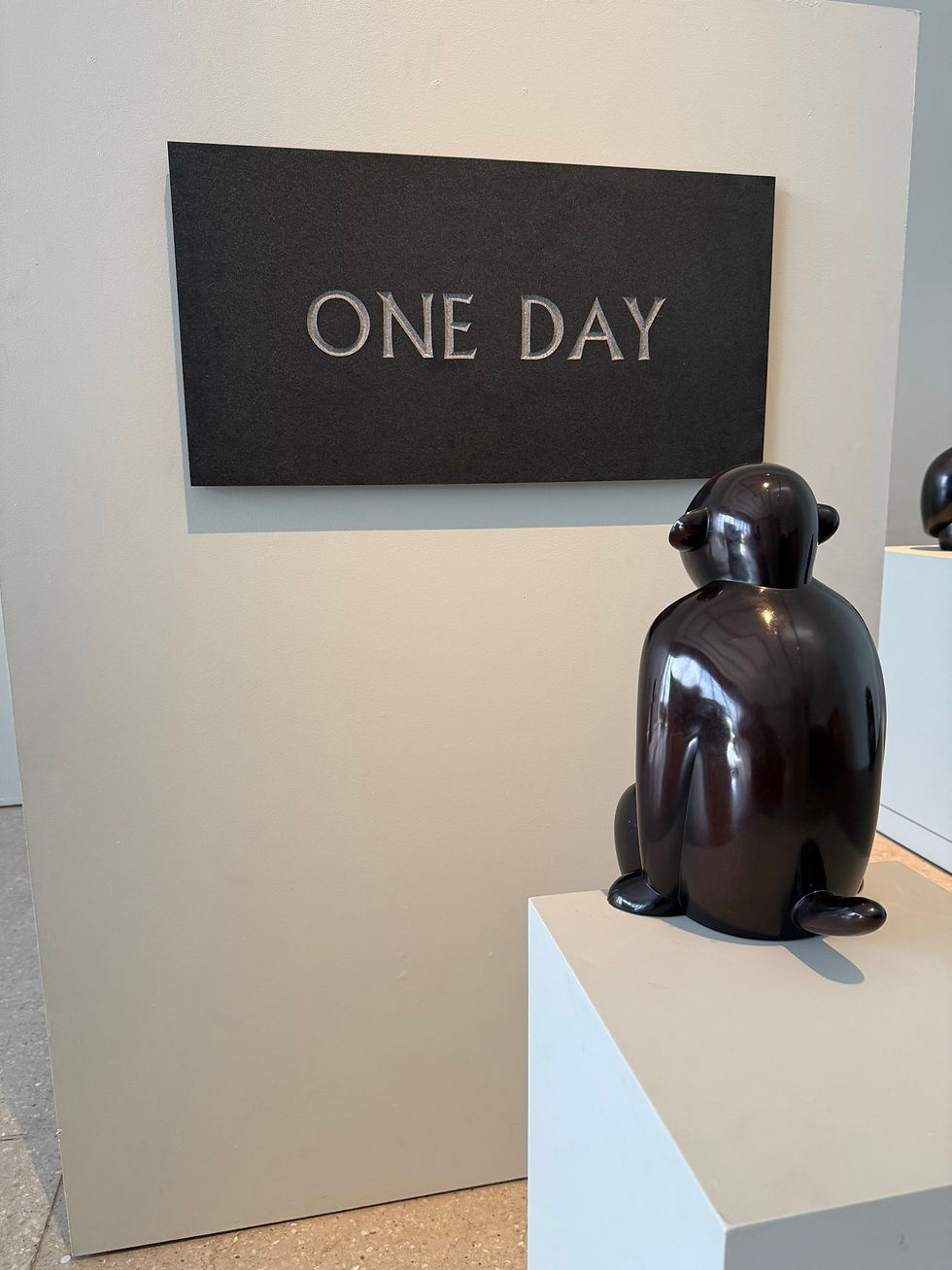
That subtlety made the work even more effective.
Throughout this trip I’ve seen contemporary African artists working at the highest levels of the international art world. They are not illustrating “African themes” for tourists. They are participating in global conversations about identity, power, history, memory, migration, inequality, and freedom while remaining deeply rooted in the realities of their own countries.

Brett Murray’s sculptures reminded me that humor can be one of the sharpest tools an artist possesses. A smile lowers our defenses. A clever title shifts our perspective. Before we realize it, we’re no longer looking at a charming little bronze animal—we’re looking at ourselves.
And that may be satire at its very best.


Comments